
The Supplement Guide After 40
What actually works, what's a waste, and the four supplements worth your money — for men and women over 40. A practical, research-backed guide in five short lessons.
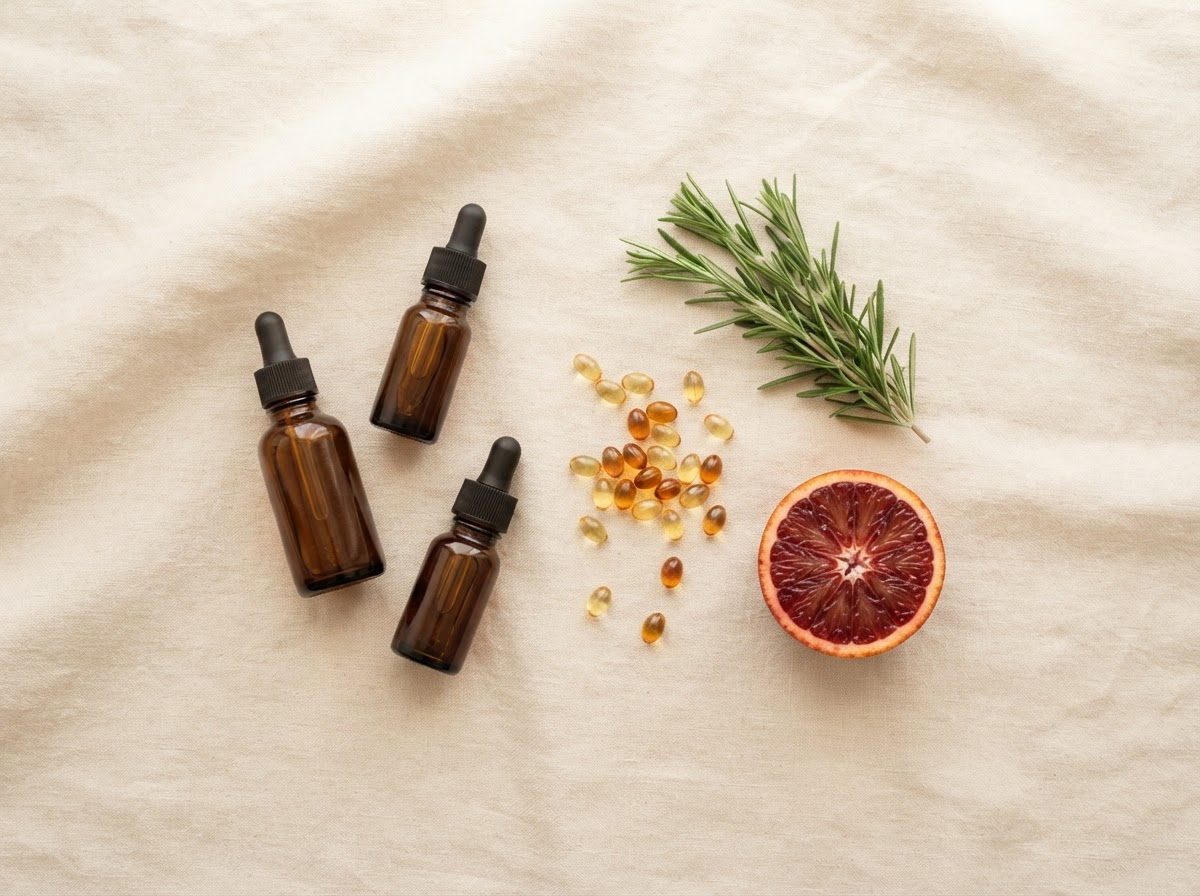
Why supplements matter more after 40
After 40, your body stops absorbing nutrients the way it used to. Stomach acid declines, enzyme production slows, and the intestinal lining becomes less efficient at pulling vitamins and minerals from food. At the same time, your demands go up: bones need more calcium, muscles need more protein cofactors, and your mitochondria — the energy engines inside every cell — start running with less efficiency.
None of this means you need a cabinet full of pills. It does mean you should be intentional about a small handful of supplements that have the strongest evidence behind them. This guide covers exactly those: the big four almost everyone benefits from, plus a few targeted additions for men and women specifically. Every recommendation here is backed by randomized controlled trials or large meta-analyses — no anecdotes, no influencer stacks.
A note before we start: supplements supplement. They do not replace sleep, movement, sunlight, whole food, or stress management. The best vitamin D pill in the world will not undo a sedentary life. Think of these as a small, high-leverage insurance policy on top of the habits you are already building.
---
The Big Four: what almost everyone needs
**Vitamin D3 (2,000–4,000 IU daily).** Your skin makes vitamin D from sunlight, but after 40 that process slows by roughly 40%. Add more time indoors and sunscreen, and deficiency becomes shockingly common — some studies estimate over 40% of adults over 50 are insufficient. Vitamin D regulates calcium absorption, immune function, and mood. It is the single most consensus-backed supplement in mainstream medicine for this age group. Take it with a meal containing fat — it is fat-soluble and absorption drops significantly on an empty stomach.
**Magnesium glycinate (200–400 mg at night).** Magnesium is involved in over 300 enzymatic reactions, from muscle relaxation to sleep regulation. Dietary intake has dropped over the last century as soil magnesium declined, and stress accelerates its excretion. Glycinate is the form best absorbed and least likely to cause digestive upset. Take it before bed — it supports the GABA system, which calms the nervous system for sleep.
**Omega-3 fatty acids (1,000–2,000 mg combined EPA + DHA).** These are the anti-inflammatory fats found in fatty fish. After 40, chronic low-grade inflammation — sometimes called "inflammaging" — becomes a driver of joint pain, cardiovascular risk, and cognitive decline. Omega-3s directly counter this pathway. If you eat fatty fish three or more times a week, you may not need to supplement. If you do not, a high-quality fish oil or algal oil makes a measurable difference. Look for a product that lists the EPA and DHA amounts separately — if the label just says "1,000 mg fish oil," you do not know how much of that is actually the active fats.
**Vitamin B12 (500–1,000 mcg, especially after 50).** Stomach acid is required to separate B12 from food proteins. As acid production declines with age, B12 absorption drops — even if you eat plenty of meat, eggs, or dairy. Low B12 can mimic cognitive decline: brain fog, fatigue, and memory slips that people often assume are just aging. The methylcobalamin form is preferred. B12 is water-soluble and excess is excreted, so it is very safe.
---
For men: prostate, hormones, and heart
Men after 40 face a specific cluster of changes: testosterone begins a slow decline of about 1% per year, the prostate deserves more attention, and cardiovascular risk ticks upward. Three targeted supplements have meaningful evidence for this stage of life.
**Zinc (15–30 mg daily).** Zinc is essential for testosterone production and prostate health. The prostate contains the highest concentration of zinc of any tissue in the male body. Deficiency is linked to lower testosterone and higher prostate-specific antigen levels. Most men get some zinc from red meat and shellfish, but absorption drops with age. Do not exceed 40 mg daily long-term — high doses can interfere with copper absorption.
**Saw palmetto (320 mg standardized extract).** For men noticing more nighttime bathroom trips or a weaker stream, saw palmetto has moderate but real evidence for reducing benign prostatic hyperplasia symptoms. It is not a replacement for seeing a urologist, but it is one of the most studied botanical supplements for this purpose. Give it at least three months before evaluating whether it helps.
**CoQ10 (100–200 mg daily).** Coenzyme Q10 is a compound your mitochondria use to produce energy. Your body makes it naturally, but production declines with age. It is also depleted by statins, the cholesterol-lowering drugs taken by millions of men over 50. If you are on a statin, CoQ10 supplementation is worth discussing with your doctor — it may reduce the muscle aches and fatigue that some people experience. The ubiquinol form is better absorbed after 40.
---
For women: bone density, menopause, and energy
Women's nutritional needs shift significantly in the decade around menopause. Estrogen, which protects bone density and influences how the body uses calcium and magnesium, begins to decline — and with it, the risk of osteoporosis climbs. Iron status also changes as monthly blood loss ends. These are the supplements where the evidence is strongest.
**Calcium with vitamin K2 (500–600 mg calcium, 90–100 mcg K2).** After menopause, bone loss accelerates to roughly 2–3% per year for the first five years. The classic advice is calcium, but calcium alone is not enough — you need vitamin D to absorb it and vitamin K2 to direct it into bones instead of arteries. The MK-7 form of K2 stays in the bloodstream longer and is more effective at lower doses. Do not take calcium and iron at the same time — they compete for absorption.
**Magnesium (same as above — 200–400 mg glycinate).** Magnesium deserves a second mention for women specifically. It supports the 300+ enzymatic processes mentioned earlier, but it also appears to reduce the frequency and severity of hot flashes in some studies, and it helps with the sleep disruption that often accompanies perimenopause. It is worth prioritizing.
**Iron — only if you need it.** Before menopause, monthly blood loss makes iron deficiency common. After menopause, iron needs drop and excess iron can become a problem — it is a pro-oxidant. Do not supplement iron after menopause unless a blood test confirms you are low. Ferritin below 30 ng/mL is the typical threshold. If you do supplement, ferrous bisglycinate is gentlest on the stomach.
**Collagen peptides (10g daily, optional).** The evidence is mixed but promising. Several randomized trials show that hydrolyzed collagen peptides combined with vitamin C improve skin elasticity and may reduce joint pain by supporting cartilage. It is not essential, but many women over 40 report noticeable improvements in skin, hair, and joint comfort after about eight weeks. Look for types I and III.
---
What to skip and how to read a label
The supplement aisle is a masterclass in marketing. Here are three rules to protect your wallet and your health.
**Rule 1: If it promises everything, it delivers nothing.** Any single pill claiming to boost energy, burn fat, sharpen focus, and balance hormones is almost certainly under-dosed across all four and effective at none. Real supplements do specific things at specific doses.
**Rule 2: Look for third-party testing.** The FDA does not verify supplement contents. Reputable products carry seals from USP, NSF, or ConsumerLab — organizations that independently test for purity and potency. If a brand does not mention third-party testing anywhere, assume they have something to hide.
**Rule 3: Multivitamins are a safety net, not a strategy.** A basic, no-iron multivitamin is a reasonable insurance policy. But the doses in multis are often too low to correct a genuine deficiency — you will not fix low vitamin D with 400 IU from a multi when the therapeutic dose is 2,000–4,000 IU. Use a multi as a baseline and add targeted supplements for specific needs.
**Supplements to be skeptical of:** Garcinia cambogia, raspberry ketones, green coffee bean extract, and most "fat burner" blends — the evidence is thin and the marketing is loud. Glucosamine for joints — some people swear by it, but large trials show it performs no better than placebo for most. Hair-skin-nails gummies — usually just overpriced biotin with sugar. Save your money for the proven four.