
Strength Training After 40: 3 Workouts That Protect Joints
Build steady strength after 40 with three joint-conscious workouts using only bodyweight and resistance bands. Clear form, safe progressions, and a simple weekly plan.
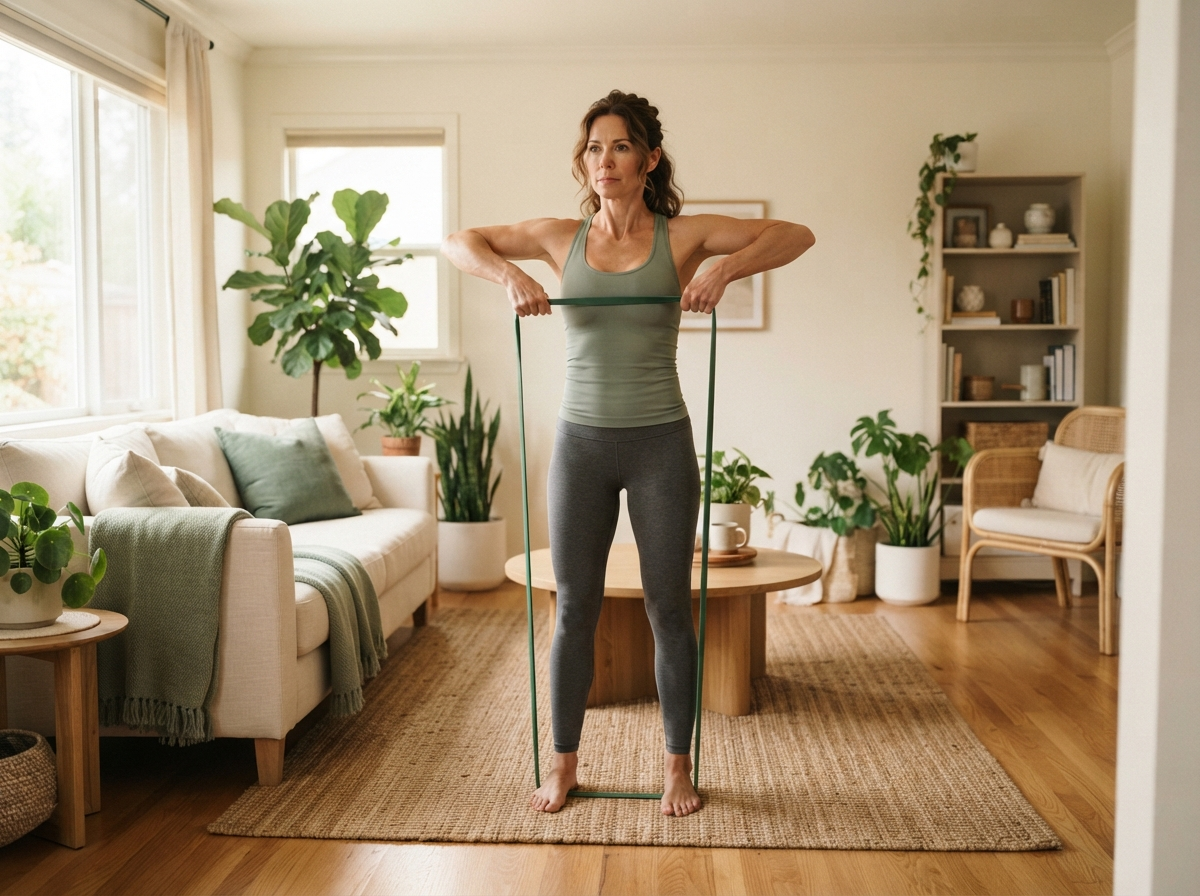
Build strength without punishing your joints. This micro course gives you a practical, joint-friendly system you can follow at home with just your bodyweight, a sturdy chair, and a light-to-medium resistance band.
Designed for adults over 40 who are new to strength training or returning after time away. Each workout prioritizes control, alignment, and steady breathing over speed or heavy loads.
Before You Begin: Train With Control
Strength after 40 responds well to consistency and good mechanics. This is not about lifting the most or moving the fastest. It is about training with control so your muscles do the work and your joints stay comfortable.
What you need: a loop or handled resistance band (light to medium), a sturdy chair without wheels, a non-slip surface, and water nearby. Wear flat, supportive shoes or bare feet if that feels stable for you.
Readiness check: You should be able to breathe comfortably, stand and sit without sharp pain, and move through a 5-minute walk without concerning symptoms. If you have a history of cardiovascular issues, uncontrolled blood pressure, recent surgery, or persistent joint pain, talk with your clinician before starting a new program.
Pain rules to respect: - Muscle effort and mild fatigue are expected. - Sharp, shooting, pinching pain inside a joint, or pain that worsens as you continue, means stop that movement. - Discomfort that changes your form is a sign to ease off, use the easier option, or skip the exercise that day. - Seek prompt care for chest discomfort or pressure, unusual shortness of breath, dizziness, or any symptom that feels concerning.
How to use these workouts: - Tempo: 3 seconds to lift or push, 1 second pause, 3 seconds to lower. No jerking. - Breathing: Exhale on effort, inhale on return. Never hold your breath. - Warm-up: 3 to 4 minutes of easy marching in place, arm circles for 20 seconds, hip circles, ankle circles, and 5 bodyweight sit-to-stands. You should feel warm, not tired. - Cool-down: 2 to 3 minutes of slow walking and gentle calf and hamstring stretches for 20 to 30 seconds each side.
Try this today
Before your first session, practice the tempo with no band. Choose one movement, count 3 up, 1 hold, 3 down for 3 reps. That control becomes your standard for every exercise.
Safety note: This educational content does not provide medical diagnosis or treatment. It is for general information only and does not replace professional guidance from your clinician or physical therapist.
Workout 1: Full-Body Foundation
Purpose: Learn the essential patterns - push, pull, squat, hinge, and core stability - with minimal joint stress. Do this 1 to 2 times per week to start.
Format: 2 to 3 rounds. Rest 45 to 75 seconds between exercises, 90 seconds between rounds. Keep 1 to 2 reps in reserve, meaning you could do 1 or 2 more with good form.
1. Chair-Assisted Box Squat - Sets/Reps: 2-3 sets of 8-10 reps - Rest: 60 seconds - How: Stand facing away from chair, feet hip-width, toes slightly out. Send hips back, bend knees, and lightly tap chair with control, then stand by driving through mid-foot. Keep chest tall, knees tracking over second toe. - Cues: Knees travel in line with toes, weight even across foot, ribs stacked over hips. - Easier: Reduce depth, hold sides of chair for balance. - Harder (when ready): Add a light loop band just above knees and gently press knees outward. Or hold band at chest with elbows down.
2. Band Row - Seated on Floor or Chair - Sets/Reps: 2-3 sets of 10-12 reps - Rest: 60 seconds - How: Sit tall, legs extended or feet flat. Loop band around feet, hold ends. Pull elbows back close to ribs, squeeze shoulder blades together, then control forward. - Cues: Lead with elbows, not hands. Neck long, shoulders away from ears. Avoid rounding low back. - Easier: Use lighter band, bend knees more. - Shoulder-friendly note: Keep elbows below shoulder height, stop pull when hand reaches rib cage.
3. Incline Push-Up to Chair or Wall - Sets/Reps: 2-3 sets of 6-10 reps - Rest: 60-75 seconds - How: Hands on sturdy chair seat or wall slightly wider than shoulders. Body straight from head to heels. Lower chest with control, then push back. - Cues: Wrists under shoulders, elbows at about 45 degrees, core gently braced. - Easier: Use wall, reduce depth. - Wrist-friendly: Make fists and push from knuckles on soft mat, or stay on wall with forearms higher.
4. Band Glute Bridge - Sets/Reps: 2 sets of 10-12 reps with 2 second hold at top - Rest: 60 seconds - How: Lie on back, knees bent, loop band above knees, feet hip-width. Press through heels, lift hips only until body is a straight line from shoulders to knees, squeeze glutes, lower slow. - Cues: Keep knees pressing slightly outward into band, avoid arching low back at top. - Easier: No band, smaller lift.
5. Standing Band Pallof Press - Anti-Rotation Core - Sets/Reps: 2 sets of 8 reps per side, hold 3 seconds out - Rest: 45 seconds - How: Anchor band at chest height, stand sideways, hold handle at chest, press straight out and resist rotation, hold, return slow. - Cues: Hips and shoulders stay square, exhale as you press, imagine balancing a glass of water on hips. - Easier: Lighter band, feet wider, press to just in front of chest.
6. Calf Raise with Chair Support - optional finisher - Sets/Reps: 2 sets of 12-15 reps - Rest: 45 seconds - How: Hands light on chair back, rise onto balls of feet tall, pause 1 second, lower slow. - Cues: Big toe pressed into floor, ankle steady, avoid leaning forward.
Progression for Workout 1: When you can complete top end of reps for all sets with good breathing and control, add one rep per set next time, then add a light band tension next session. Progress one variable at a time.
Try this today
Pick two days this week with at least one rest day between, for example Tuesday and Friday. Do Workout 1 both days, focus on tempo and breathing over weight.
Workout 2: Upper-Body Strength Without Strain
Purpose: Build pushing, pulling, and shoulder stability strength while keeping shoulders, elbows, and wrists comfortable. Ideal for posture, carrying, and everyday reaching.
Format: 2-3 rounds. Rest 45-90 seconds between exercises. Keep movements smooth and shoulder blades gently active.
1. Band Chest Press - Standing - Sets/Reps: 3 sets of 8-12 reps - Rest: 60-75 seconds - How: Anchor band behind you at chest height, hold handles, elbows at about 45 degrees, press forward until arms extended without locking elbows hard, return slow. - Cues: Ribs down, slight chin tuck, wrists straight, squeeze chest then control back. - Easier: Lighter band, split stance with front knee soft for balance. - Wrist/shoulder tip: Keep elbows just below shoulder, avoid flaring elbows wide. If you feel pinching in front of shoulder, shorten range by 2 to 3 inches.
2. Half-Kneeling One-Arm Band Row - Sets/Reps: 3 sets of 10 reps per side - Rest: 60 seconds - How: Kneel on one knee, opposite foot forward, anchor band low in front. Pull with one arm, elbow close to body, rotate slightly through upper back, control forward. - Cues: Tall spine, hips square, pull to lower ribs, think elbow to pocket. - Easier: No half-kneel, stand with hinge at hips.
3. Band Pull-Apart - Sets/Reps: 2-3 sets of 12-15 reps - Rest: 45 seconds - How: Hold band in front at shoulder height, arms straight but not locked. Pull hands apart by squeezing mid-back, hands stay at shoulder level, return slow. - Cues: Keep shoulders down, initiate from between shoulder blades, stop if you shrug. - Shoulder-friendly: Keep slight bend in elbows, do not force hands past shoulders if tight.
4. Wall Slide with Gentle Hold - Sets/Reps: 2 sets of 8 reps with 3 second hold at top - Rest: 45 seconds - How: Back against wall, elbows bent, backs of hands and wrists touching wall overhead as able. Slide hands up, then down, keeping contact with wall. - Cues: Ribs stay heavy on wall, avoid arching low back to reach higher. - Easier: Do seated in chair without wall, move only within comfortable range.
5. Chair Triceps Press - Bodyweight - Sets/Reps: 2 sets of 8-10 reps - Rest: 75 seconds - How: Sit on edge of sturdy chair, hands beside hips, slide hips slightly off, knees bent 90 degrees. Bend elbows to lower hips a few inches, then press back up. - Cues: Elbows point back, not out, shoulders down, chest open. Keep movement small and controlled. - Wrist/elbow tip: If wrists are sensitive, keep range short or substitute standing band triceps press with light band anchored overhead. Stop if elbow pinches.
6. Dead Bug - Core Stability Without Neck Strain - Sets/Reps: 2 sets of 6-8 per side, slow - Rest: 45 seconds - How: On back, knees over hips bent 90 degrees, arms to ceiling. Lower opposite arm and leg toward floor with control, return, switch. - Cues: Low back stays gently pressing mat, exhale as you extend, move only as far as you can without arching. - Easier: Only arms, or only legs with knees bent.
Progression for Workout 2: After two sessions where you finish all sets feeling you could do 2 more reps, use next band thickness up or add 2 reps per set, not both. For wall slides, progress by adding 1 inch of range when it stays comfortable.
Try this today
Before each set, take 2 breaths to set posture - inhale to lengthen spine, exhale to settle ribs and shoulders. That reset improves shoulder comfort and pressing quality.
Workout 3: Lower-Body Strength and Stability
Purpose: Strengthen hips, thighs, and calves while training balance and knee and hip control. Chair support is part of the plan, not a compromise.
Format: 2-3 rounds. Rest 60-90 seconds between exercises. Focus on knee alignment over toes and stable hips.
1. Supported Sit-to-Stand - Sets/Reps: 3 sets of 8-10 reps - Rest: 75 seconds - How: Sit tall on sturdy chair, feet hip-width, light hold on chair sides if needed. Drive through heels and mid-foot to stand, pause tall, sit with control without plopping. - Cues: Knees tracking over toes, weight through heels and big toe, chest proud. - Easier: Higher chair, use hands to assist. - Knee-friendly: Reduce depth to half-sit for first week, keep shin more vertical.
2. Band Side Step with Chair Touch - Sets/Reps: 2-3 sets of 10 steps per direction - Rest: 60 seconds - How: Mini loop band just above knees or ankles, slight knee bend, step sideways with control, then gently touch chair for balance reset every 2 steps. - Cues: Hips level, toes forward, knees outward into band, avoid waddling. - Easier: No band, smaller steps, hands hover over chair. - Hip-friendly: Keep steps short, stay in pain-free range, avoid deep knee bend.
3. Romanian Hinge to Chair - Bodyweight Hip Hinge - Sets/Reps: 3 sets of 8-10 reps - Rest: 75 seconds - How: Stand arm length from chair, feet hip-width, soft knees. Push hips back, reach hands toward chair seat, feel gentle hamstring stretch, then drive hips forward to stand tall. - Cues: Back flat, neck long, shins stay fairly vertical, hips do the work, not low back. - Easier: Less depth, hands higher on chair back. - Low back tip: Keep ribs down, stop hinge when you feel you might round low back.
4. Standing Hip Abduction with Band - Chair Supported - Sets/Reps: 2 sets of 10-12 per side - Rest: 60 seconds - How: Band loop around ankles, hands on chair back, stand tall, lift one leg sideways with knee straight but not locked, return slow without shifting trunk. - Cues: Stand tall, avoid leaning, toe points forward, glutes work more than low back. - Knee-friendly: Do without band first, small range, stable knee slightly soft on standing leg.
5. Heel-Elevated Calf Raise + Tibialis Lift Pair - Sets/Reps: 2 sets of 12 calf raises + 10 toe lifts - Rest: 60 seconds - How: Hold chair, rise onto toes for calf raise, lower slow. Then with heels down, lift toes toward shins, hold 1 second. That pair supports ankle stability. - Cues: Even pressure across big toe and small toe side, ankles steady, no rushing. - Easier: Do one movement per set, reduce reps.
6. Marching in Place - Balance and Hip Flexion Finisher - Sets/Reps: 2 sets of 20-30 seconds - Rest: 45 seconds - How: Stand tall near chair, march slowly lifting knee to hip height or lower, opposite arm gently swings, pause 1 second at top when you can. - Cues: Stand extra tall, land softly, use chair fingertip touch only if needed. - Easier: Lower knee height, shorter duration.
Progression for Workout 3: Add 2 reps per set when form stays crisp, then add band tension or remove hand support for one exercise at a time. For sit-to-stand, lower chair height by an inch when you can do 10 reps with control and without joint irritation.
Weekly scheduling that protects recovery: - Start with 2 sessions per week, for example Monday Workout 1 and Thursday Workout 3. - Next week do Workout 2 and Workout 1. - Continue alternating, leaving at least one easy or rest day between. - If you want a third session after 2 to 3 weeks, add the workout you missed that week as a light technique day at reduced volume. - Progress rule: Only change one thing per week - more reps, or heavier band, or less rest, or more range. Never all at once.
Try this today
Use the same chair and same band placement each session. Write down reps in your phone notes. Seeing steady numbers rise is motivation and safety data at once.
Safety and when to pause or seek guidance: - Stop an exercise for the day if you feel sharp or pinching pain, numbness, chest pressure, unusual shortness of breath, dizziness, or swelling that worsens. - Mild next-day muscle soreness is common at the start. Pain inside the joint, pain that lingers more than 48 hours, or pain that consistently worsens after training deserves professional input. - Talk with your clinician if you have new symptoms, a recent injury or surgery, osteoporosis with concerning history, or conditions that affect balance or blood pressure. - This course offers general educational information and is not medical advice. It does not diagnose, treat, cure, or prevent any condition.
You now have a complete, joint-friendly starting system: a safe setup, three full workouts with modifications and progressions, and a simple weekly rhythm. Keep the tempo slow, the breathing steady, and the progression patient. Strength builds best when you can repeat the work week after week.
Try this today
Choose your two training days for next week right now, lay out your band and chair the night before, and complete Workout 1. Consistency with control is the entire strategy.