
Joint Mobility Foundations
A gentle, practical introduction to daily joint care after 40. Learn how to keep your knees, hips, shoulders and spine feeling smooth and supported with 5-minute mobility habits.
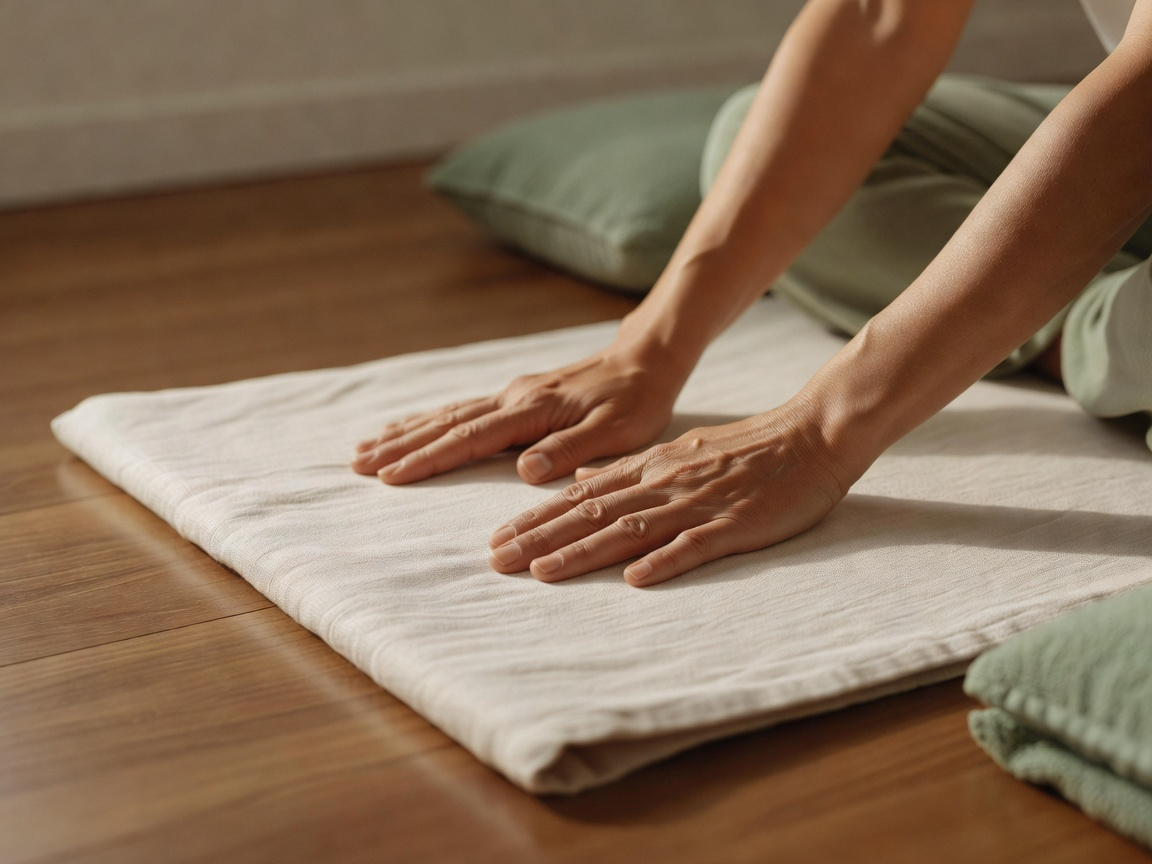
After 40, your joints thrive on consistency more than intensity. This micro course gives you a simple daily framework to keep your most-used joints — knees, hips, ankles, shoulders, and spine — feeling smooth and supported. No gym needed, no complicated sequences. Just small movements you can do in regular clothes, wherever you are.
Lesson 1: Why Joints Like Daily Motion
Your joints are nourished by movement. Cartilage does not have its own blood supply, it relies on gentle compression and release to circulate synovial fluid, which brings nutrients and carries away waste. When you sit for hours, that circulation slows and stiffness builds.
Think of morning stiffness not as damage, but as overnight stillness. The goal is not to push through pain — it is to reintroduce motion in a way that feels safe and gradual. Daily joint circles, slow bends, and brief holds signal safety to your nervous system, which in turn lets muscles relax around the joint.
A helpful rule: move each major joint through most of its comfortable range once a day. Not to the end of your flexibility, just to where it still feels smooth and controlled. Over weeks, that comfortable range tends to expand on its own.
Try this today
Tomorrow morning, before coffee, do 30 seconds of gentle ankle circles each side, knee bends holding a counter, and shoulder rolls. Notice how your walk to the kitchen feels afterward.
Lesson 2: The 5-Minute Morning Joint Routine
This is the routine Linden clients use most. Set a timer, keep it easy, breathe through your nose.
- Ankle circles, 10 each direction per side — supports balance and reduces knee strain on stairs
- Hip circles, hands on hips, 8 each direction — wakes up deep hip stabilizers
- Standing knee hugs, alternating for 45 seconds — improves balance and hip flexor length
- Wall slides, 8 slow reps — restores shoulder overhead range without pinching
- Cat-cow at a countertop, 6 rounds — hydrates the spine before you sit
Do this in socks on a rug if you like. It should not make you sweat. If something pinches or feels sharp, make the circle smaller or skip it and tell your clinician at your next visit.
Try this today
Do the sequence 5 mornings in a row and rate stiffness 0-10 before and after in your notes app. Most people see a 2-point drop by day 3.
Lesson 3: Joint-Friendly Daily Habits
Mobility is not just exercise, it is how you sit, stand, and carry things. Two small shifts make a big difference after 40.
First, break up sitting every 40 to 50 minutes. You do not need a workout — stand, roll your shoulders 5 times, do 5 gentle sit-to-stands from your chair, and look out a window for 20 seconds. This resets posture and reminds your hip joints they can extend.
Second, spread load evenly. Carry groceries in two bags, keep heavy items close to your body, and avoid twisting while holding weight. When you go downstairs, place your whole foot, not just your toes — it reduces knee compression.
Warmth also helps. If your hands feel stiff in winter, warm water for 60 seconds before mobility. If knees ache after a long drive, a warm shower followed by slow bends often eases it more than stretching hard while cold.
Try this today
Put a sticky note on your laptop that says "stand, roll, sit-tall." When you see it, do exactly that.
Lesson 4: Building a Week That Your Joints Trust
Your joints adapt to what you do most often, not what you do once intensely. The key is a predictable weekly rhythm they can trust.
A simple template: daily 5-minute morning routine, plus two 10-minute longer sessions midweek and on a weekend. Those longer sessions can be a brisk walk with arm swings, gentle yoga focused on hips, or gardening with frequent posture changes.
Track only two things: Did I do my morning routine? Did I move after sitting? A checkmark is enough. When you miss a day, resume the next morning without doubling up. Joint comfort rewards steadiness, not perfection.
If you have a known joint condition, use pain as information, not failure. Mild muscle fatigue is expected. Joint swelling that lasts beyond a day, sharp catching, or numbness deserves professional assessment.
Try this today
At the end of this course, write your joint plan on one index card — morning routine, sit-break reminder, and your two longer movement slots. Tape it where you get ready in the morning.